
Luxury customer experience: why waiting is no longer acceptable
In the world of luxury, every detail counts. The architecture, the welcome, the way staff speak, the pace of the visit or purchase... everything contributes to creating a smooth, exclusive and memorable experience.
Waiting standing up, sometimes for a long time, in a confined space, with no visibility or control over time, goes against the codes of luxury. At a time when customers expect personalised and seamless experiences, ‘queuing’ is simply no longer compatible with a premium customer experience.
Luxury faces a paradox: perceived excellence vs operational irritants
Luxury is based on a powerful promise: that of time that is controlled, chosen and valued. However, waiting is perceived as a loss of control. Numerous customer experience studies show that waiting time is one of the main factors contributing to dissatisfaction, even when the final product or service is of excellent quality.
58% of consumers mention waiting times as a source of frustration.
In the luxury sector, this paradox is all the more noticeable as the clientele is often international, demanding, accustomed to high standards and intolerant of unnecessary friction. A visible queue in front of a shop can even damage the brand image before any human interaction has taken place.
Virtualising queues: a solution in line with luxury standards
Queue virtualisation involves replacing physical queues with digital ones. Customers register remotely or on site, receive an estimate of their waiting time and are notified when they can access the service or location.
This system radically transforms the perception of waiting. Time is no longer endured, but made visible, predictable and controllable.
In the luxury sector, this approach has several key advantages:
It removes the visibility of queues, which are often perceived as anti-premium.
It gives customers back control over their time, a strong marker of consideration.
It allows for better flow management, without putting pressure on reception teams.
It paves the way for a more personalised and seamless experience.
Waiting as a marketing tool and a means of personalising the customer experience
In the luxury sector, personalisation is not a bonus: it is an implicit expectation. Every customer wants to be recognised, understood and supported in an individualised manner.
Virtual queuing paves the way for a more refined marketing approach that is more respectful of the customer experience.
While waiting to be greeted by an advisor, customers can join a virtual queue and be invited, voluntarily and non-intrusively, to answer a short questionnaire or simply browse the products offered by the store. Their preferences, interests, and intentions for their visit or purchase can thus be gathered before they interact with an advisor. If they have visited before, their advisor is notified of their registration and can prioritise them. This time, which would otherwise have been perceived as wasted, becomes a moment of preparation for the experience.
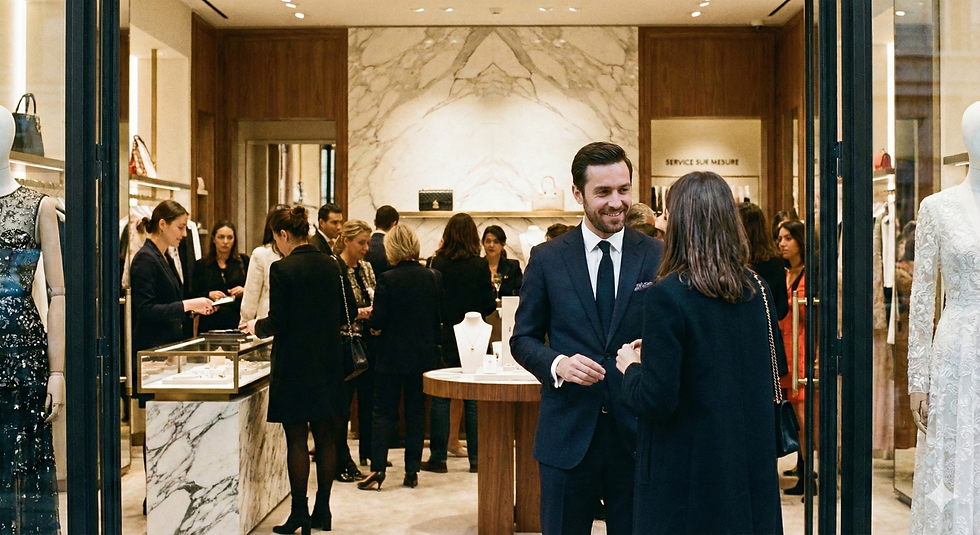
This information is invaluable to front office teams. When it is the customer's turn, the advisor already has concrete information to tailor their pitch, guide the visit, offer relevant products or services, and adjust the level of support. The exchange becomes more fluid, relevant, and valuable.
From a marketing perspective, this approach also provides a better understanding of visitors' expectations, refines customer knowledge and enriches qualitative data, without weighing down the customer journey. It is part of an experiential marketing approach, where data is not collected for its own sake, but to provide a more accurate and personalised experience.
In a world where exclusivity is based as much on emotion as on attention to detail, transforming waiting time into a tool for personalisation significantly enhances the quality of the premium welcome and the memorability of the customer experience.


